General restrictions
Prohibited items

Passengers are prohibited from carrying these items in either checked or hand baggage.
The list of prohibited items are as follows:
- Explosives, fireworks, munitions, flares, Christmas crackers, sparklers, party poppers and pyrotechnics
- Security-type cases/boxes incorporating goods such as lithium batteries or pyrotechnics
- Compressed gases (flammable, non-flammable, or poisonous) such as butane, propane, aqualung cylinders, lighter fuels, or refills
- Lighters (butane, absorbed fuel, electric, battery-powered, novelty)
- Oxidising substances such as bleaching powder and peroxides
- Flammable liquids such as paints and adhesives
- Flammable solids such as safety matches and articles which are easily ignited
- Disabling devices such as mace or pepper sprays, with irritant properties
- Poisons such as arsenic, cyanides, or insecticides
- Radioactive materials
- Corrosive materials such as mercury (which may be contained in thermometers or blood pressure gauges,) acids, alkalis, and wet cell batteries
- Meals-Ready-to-Eat (MREs)
- Firearms / parts of firearm such as revolvers, rifles, imitation firearms, pellet guns, ball-bearing guns, barrels, trigger assembly etc
- Ammunition including blank, spent / empty cartridges
- Toy guns (replicas and imitation firearms that may be mistaken for real weapons)
- Any other substances which, during a flight, present a danger not covered above, such as magnetised, offensive, or irritating materials
Note: Failure to declare hazardous materials may result in civil or criminal penalties for passengers. All airlines are required to report violations to the relevant government authorities.
Restricted items
For the comfort, safety, and security of other passengers on the flight, passengers are not allowed to carry restricted items in their carry-on baggage. To minimise inconvenience, you are advised to check in or put these items in your checked-in baggage instead:
- Knives (including hunting knives, swords, and pocket knives)
- Scissors and any other sharp/bladed objects (e.g. ice-pick, nail clippers, embroidery, crocheting and knitting needles) considered illegal by local law
- Weapons such as whips, nan-chakus, baton, or stun gun
- Hand-cuffs
- Sporting equipment such as baseball/cricket bats, golf clubs, hockey sticks, billiard cues
- Devices with spillable batteries
- Aerosols (hair sprays, perfumes, medicines containing alcohol) not exceeding 0.5 KG or 0.5 L per article and 2.0 KG or 2.0 L in total weight. Release valves on aerosols must be protected by a cap or other suitable means to prevent inadvertent release of the contents.
- Electronic devices which cannot be switched off (e.g. Furby toys)
- Toy guns that do not resemble weapons, such as plastic water guns
- Any other items which are deemed security hazards by local law
- Any other items that resemble or have similar functions to the above items
Please note that these items will be retrieved at the boarding gate by the local authorities and depending on local conditions, the items may not be returned to you.
While there is no restriction on the carriage of Knee Defenders or similar devices, their use on board the aircraft is strictly prohibited. The use of such a device to prevent a seat in front from reclining alters the intended recline function of the Economy Class seat and interferes with the inflight experience SIA wishes to provide our passengers. For their comfort, all passengers may recline their seats during permitted phases of a flight. During meal service, cabin crew will as a courtesy, request for Economy Class seats to be put upright in consideration of the dining comfort of all passengers.
E-cigarettes
Electronic cigarettes, also known as e-cigarettes, personal vaporisers or electronic nicotine delivery systems are only allowed in carry-on baggage where permitted by the applicable local laws. However, the use of e-cigarettes in the cabin is prohibited at all times.
Please note that from 1 Feb 2018, it will be illegal to buy, use and possess imitation tobacco products (such as e-cigarettes) in Singapore.

Lithium Batteries
How your lithium batteries are stored and their watt-hour (Wh) ratings determines whether or not they may travel by air. Use the following guide to help you find out if your batteries are accepted on Singapore Airlines and SilkAir flights:
| Lithium ion / Metal battery* | Allowed in cabin baggage | Allowed in checked-in baggage |
|---|---|---|
Watt-hours not exceeding 100/Lithium content not exceeding 2g For example: Laptops, mobile phones, and digital and video cameras  |
In Equipment: Yes 1. Maximum of 15 devices per passenger (combined with checked baggage) |
In Equipment: Yes 1. Maximum of 15 devices per passenger (combined with cabin baggage) 2. Must be completely switched off and protected from inadvertent activation |
| Spare/Not in Equipment: Yes 1. Maximum of 20 pieces per passenger 2. Must be protected from damage and short circuit |
Spare/Not in Equipment: No |
|
| Watt-hours exceeding 100 but not exceeding 160/Lithium content exceeding 2g but not exceeding 8g For example: Portable medical devices, Rechargable battery  |
In Equipment: Yes 1. Maximum of 2 devices per passenger |
In Equipment: No |
| Spare/Not in Equipment: Yes 1. Maximum of 2 pieces per passenger 2. Must be protected from damage and short circuit |
Spare/Not in Equipment: No |
|
| Watt-hours exceeding 160/Lithium content exceeding 2g for portable electronic device (PED) or exceeding 8g for portable medical electronic device (PMED) For example: Electric Segways, electric bicycles, underwater lamps etc.  |
In Equipment: No Spare/Not in Equipment: No |
In Equipment: No Spare/Not in Equipment: No |
*Watt hours (Wh) = Amp hours (Ah) x Voltage (V)
All batteries & battery-powered devices carried must be for personal use (not for resale or distribution by a vendor)
Additional Requirements
- Battery-operated devices (not exceeding 100Wh) may be transported in checked baggage, but it is recommended that such devices be kept in cabin baggage.
- All battery-operated devices in checked baggage must be completely switched off (not in hibernation or sleep mode). They must also be packaged to prevent inadvertent activation and protected from damage.
- Batteries must be installed in the equipment when checked-in.
- Rechargeable battery packs, e.g. power banks, are treated as spare lithium batteries. The carriage of these items are subject to local regulations.
- Spare lithium batteries are not allowed in checked-in baggage. They must be carried as cabin baggage only.
- Lithium batteries that have been damaged, identified as defective for safety reasons by the manufacturer or have the potential of producing a dangerous evolution of heat, fire or short circuit are not permitted to be transported as cargo on cargo aircraft and as cargo/checked-in baggage on passenger aircraft. Such batteries or defective devices may be carried in carry-on baggage or on the person, provided the following are adhered to:
(a) Remain completely switched off;
(b) Refrain from being charged or used onboard the aircraft; and
(c) Protected from accidental activation
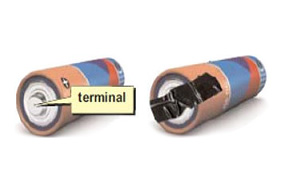
- Spare batteries should be in the original manufacturers packaging. If not, to protect it from damage or short circuit, you should tape across the battery’s metal parts (terminals) or place each battery in its own protective case or plastic bag.
Electric Wheelchair, mobility aids and assistive devices
Wheelchairs, mobility aids and assistive devices that are powered by lithium batteries and required for use by passengers will be allowed on board as checked-in baggage in conformance to the requirements stated in IATA Dangerous Goods Regulations. Passengers are requested to inform our Reservations department 48 hours in advance and also alert our check-in staff at the airport.
Wheelchair, mobility aids and assistive devices with non removable battery(ies)
Battery(ies) that cannot be removed from the wheelchair or mobility aid (non-collapsible device):
- Battery(ies) to remain in the device and securely attached to the wheelchair or mobility aid.
- The battery terminals must be protected from short circuits by insulating the terminals (e.g. by taping over exposed terminals).
- The wheelchair/mobility aid must be switched off and protected from accidental activation.
- No battery power rating (WH) limitation.
Wheelchair, mobility aids and assistive devices with removable battery(ies)
Battery(ies) that can be removed from the wheelchair, mobility aid (collapsible device):
- The battery(ies) must be removed and protected from short circuit by insulating the terminals. The wheelchair/mobility aid may then be checked-in without restriction.
- The removed battery(ies) must be protected from damage by placing them individually in a protective pouch, and carried as cabin baggage.
- The power rating of the battery must not exceed 300Wh, or for devices fitted with two batteries, not exceed 160Wh each.
- Passengers are allowed to take one spare battery not exceeding 300Wh, or two spare batteries not exceeding 160Wh each. They must be carried as cabin baggage.
Prohibited personal transportation devices

All small lithium battery-powered personal transportation devices (e.g. mini-Segway, hoverboard, solowheel, airwheel, balance wheel, etc.) are prohibited as checked-in and hand-carry baggage. This is regardless of whether the battery can be removed from the device. If these items are brought to the airport, they will be refused at check-in. It will be the passenger's responsibility to arrange for the storage or disposal of such items prior to boarding.
Country specific restrictions
Every country has their own set of restrictions, and you can find out more about the restrictions that apply to the country you’ll be visiting below.
Note: Failure to declare hazardous materials may result in civil or criminal penalties for passengers. All airlines are required to report violations to the relevant government authorities.
Carriage of Baggage Powered by Lithium Batteries
Baggage powered by lithium batteries (commonly known as “Smart Baggage”) may include motors, power banks, GPS, GSM, Bluetooth, RFID or Wi-Fi technology.
All current requirements on the carriage of lithium batteries will apply to the carriage of “Smart Baggage”.
In addition, the following requirements must be fulfilled for the “Smart Baggage” to be accepted as:
A. Cabin baggage:
- Lithium battery must not exceed 160 Wh.
- Lithium battery must be removable but may remain installed in the device.
- The baggage must be within cabin baggage allowance.
- All transmitting functions (example: Bluetooth, Wi-Fi) must comply with the PED restrictions in the onboard Passenger Safety Information Card.
B. Check-in baggage:
- Lithium battery must be removed and carried into the cabin.
- Lithium battery must not exceed 160 Wh.
- Each passenger can carry a maximum of 2 spare lithium batteries of 100-160Wh into the cabin.
If the "Smart Baggage" does not meet the above safety requirements, it will be refused at check-in. It will be the passenger's responsibility to arrange for the storage or disposal of such items prior to boarding.
Baggage Checks in the United States of America (USA)
The US Transportation Security Administration (TSA) stipulates that passengers travelling into and out of US commercial airports can no longer access their checked baggage once baggage screening is completed. Hence, we recommend that you remove all items you will need on board, before checking in your baggage.
TSA advises passengers to leave their baggage unlocked or use a TSA accepted and recognised lock to facilitate the search process. TSA will not be liable for any damage caused to locked bags if they are opened for screening. For bags opened during screening, the screeners will close it with a tamper-evident seal and insert a notice in your bag to inform you that the bag has been opened.
As this procedure is governed by US legislation and beyond the control of the airline, we regret that we cannot be held liable for damage or loss of items from your baggage. You may visit the Transportation Security Administration website for further information.
If you are travelling from airports that serve as the last points of departure to the United States, the TSA may require passengers to undergo enhanced security measures. Such checks may include the inspection of your Personal Electronic Devices (PEDs) prior to carrying them onboard.
- Laptops
- Tablets
- E-readers
- Camera
- Portable DVD players
- Electronic game units larger than a smartphone
- Travel printers/scanners
Powder-like substances 350ml or larger may also be subjected to additional screening and are prohibited in the cabin.
Examples of such powders may include, but are not limited to:
- Talcum Powder
- Flour
- Sugar
- Ground Coffee
- Spices